

Businesses rely on software to manage operations, communicate with customers, automate repetitive tasks, and make informed decisions. Ready-made software does not always fit every business process. Different organizations have different workflows, requirements, customers, and growth objectives.
This is where custom software development services can help. Instead of changing your business processes to fit generic software, custom development shapes the software around the way your business works.
What Is Custom Software Development?
Custom software development involves creating software specifically for a business, organization, or operational requirement. The process can include planning, UI/UX design, application development, database integration, testing, deployment, and ongoing improvements.
- Business process automation
- Customer and employee management
- Inventory management
- Online booking systems
- CRM platforms and business dashboards
- E-commerce and internal management systems
- Third-party API integrations
Why Businesses Need Customized Software
Generic software may provide useful features, but it can also include functions a company does not need or lack capabilities it does. Custom software can be designed around specific workflows and requirements.
1. Better business process automation
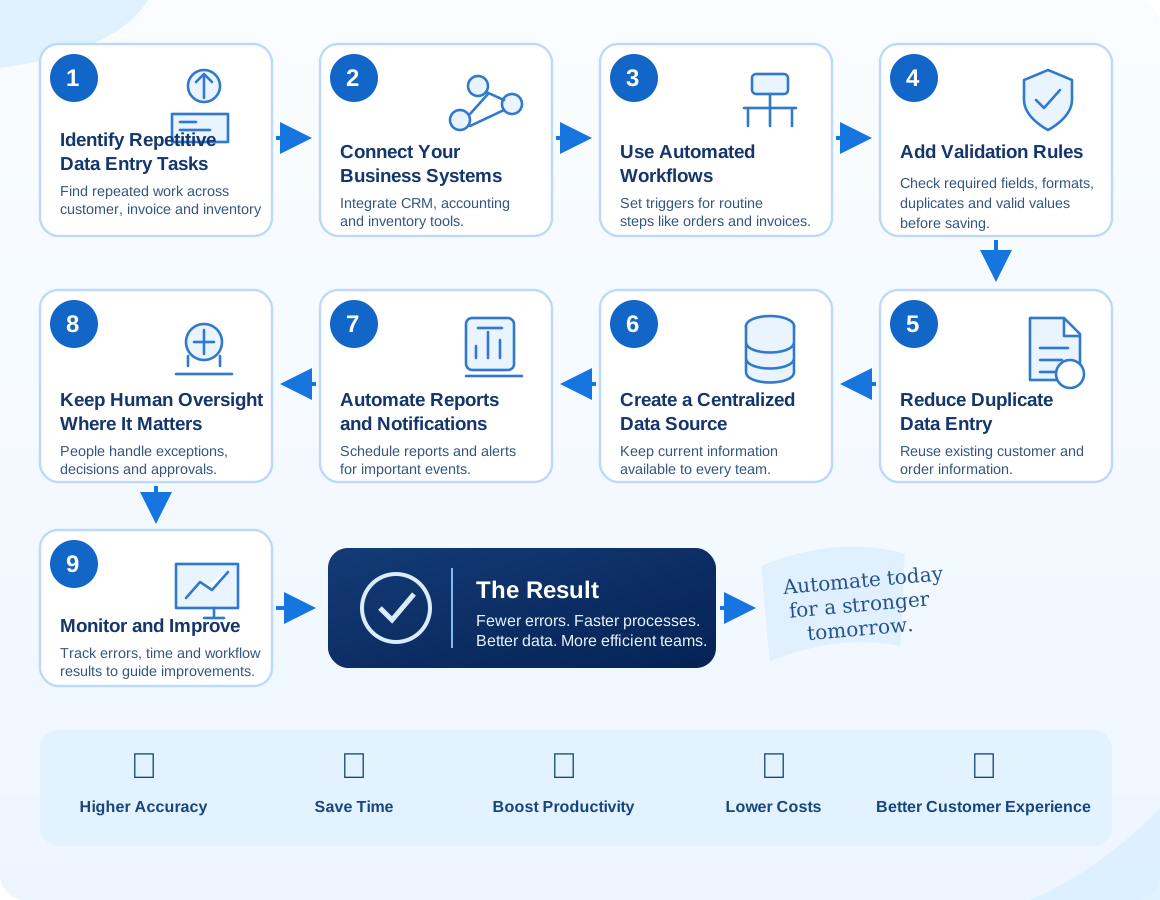
Manual tasks consume employee time and increase the possibility of errors. Customized software can automate repetitive processes so teams can focus on higher-value work. See our guide to reducing manual data entry errors with business automation.
2. Improved operational efficiency
When processes are managed through a connected system, employees can access relevant information more efficiently. This can reduce unnecessary steps and improve productivity.
3. Scalability
Software requirements change as a business grows. Custom applications can be planned for future expansion, making it easier to introduce additional features, users, integrations, and functionality.
4. Integration with existing systems
Custom software can connect existing accounting, customer management, communication, analytics, payment, or inventory platforms. A well-planned API integration can reduce data silos and repeated work.
5. Greater control
A customized system gives businesses more control over features, workflows, user permissions, and functionality when standard software lacks the needed flexibility.
When Should You Consider Custom Software?
Custom development may be worth considering when existing software creates operational limitations or a business process cannot be handled effectively with off-the-shelf solutions. Common signs include:
- Employees rely heavily on spreadsheets.
- Multiple disconnected systems support daily operations.
- Manual data entry takes significant time.
- Existing software lacks important features.
- Business processes require frequent workarounds.
- Departments need to share information.
- The company needs a specialized customer or employee portal.
- Management needs customized reporting and dashboards.
Key Features of a Well-Developed Business Application
A successful solution should solve a genuine business problem and support the people who use it. Plan for a user-friendly interface, appropriate authentication and security, reliable performance, scalability, integrations, and maintainable code. Regular software testing helps protect quality as the application evolves.
Choosing the Right Development Partner
Software development involves more than writing code. Look for a team that understands your requirements, follows a structured process, communicates clearly, and can support the software after launch. A sound approach moves from understanding the business problem to requirements, solution planning, user experience, development, testing, deployment, and ongoing improvement.
If you are comparing platforms for a specific customer workflow, our article on choosing CRM software for your business may also help.
Build Software That Supports Business Growth
Software should work as a business asset rather than another operational complication. When technology is designed around actual requirements, it can automate processes, connect teams, improve customer experiences, and support long-term growth. For businesses with specialized workflows or limitations with existing tools, custom software solutions offer a flexible way to align technology with business goals.
Frequently Asked Questions
What are custom software development services?
They involve designing and developing software according to a business’s requirements, workflows, users, and operational objectives.
Is custom software suitable for small businesses?
Yes. Small businesses can use customized software to automate repetitive processes, manage customers, improve workflows, and create systems that can scale as the business grows.
How long does custom software development take?
The timeline depends on project complexity, features, integrations, design requirements, testing, and users. A simple application generally takes less time than a complex enterprise platform.
Can custom software integrate with existing business tools?
Often, yes. Depending on the technologies and available APIs, custom applications can integrate with CRM, payment, accounting, communication, analytics, and other systems.
Can custom software be upgraded after launch?
Yes. A properly planned application can receive new features, security improvements, integrations, and performance enhancements as business requirements evolve.
← Back to Blogs