

Running a business involves managing multiple activities, from customer communication and employee coordination to inventory, reporting, and financial operations. As businesses grow, handling these responsibilities through spreadsheets, disconnected applications, and manual processes can become increasingly difficult.
For many Australian businesses, standard software solutions may not provide the flexibility needed to manage their specific operational requirements. Every industry has different workflows, compliance needs, customer expectations, and management processes.
Industry-specific software offers a practical way to address these challenges by creating digital systems around actual business operations rather than forcing employees to adjust their work to generic tools.
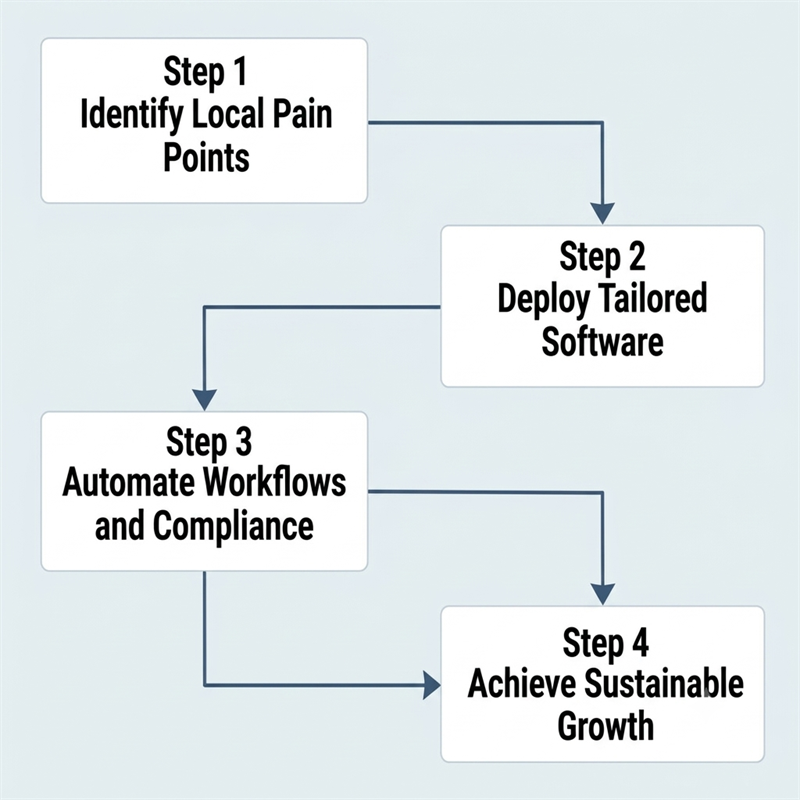
Why Australian Businesses Need Industry-Specific Software
Business requirements are rarely identical, even within the same industry. A manufacturing company may need production tracking and inventory management, while a logistics business may require fleet monitoring, delivery scheduling, and real-time shipment updates.
Using separate applications for every activity can create information gaps and unnecessary administrative work.
Industry-specific software helps businesses address these limitations through:
- Centralised operations: Manage important business activities through a connected platform.
- Automated workflows: Reduce repetitive administrative tasks and manual data entry.
- Better visibility: Access operational information and performance reports from one system.
- Improved coordination: Help different departments share information efficiently.
- Flexible functionality: Include features based on actual business requirements.
A properly planned software solution can make everyday operations easier while giving management better control over business activities.
5 Business Challenges That Custom Software Can Solve
1. Disconnected Business Applications
Many organisations use different applications for sales, accounting, inventory, customer management, and employee coordination.
When these systems cannot communicate with each other, employees may need to enter the same information multiple times. This increases administrative workload and creates opportunities for errors.
A connected software platform can integrate important business applications through APIs and shared databases. This allows information to move between departments more efficiently.
2. Inefficient Approval Processes
Businesses often depend on manual approvals for purchase orders, employee requests, expense claims, and operational activities.
When approvals happen through emails or spreadsheets, requests can get delayed or overlooked.
Custom workflow software can introduce automated approval sequences, role-based permissions, notifications, and activity tracking. Managers can monitor pending requests, while employees can check the progress of their submissions.
3. Limited Business Reporting
Making business decisions without accurate operational information can create unnecessary risks.
If sales, inventory, customer, and financial data are stored separately, preparing meaningful reports can take considerable time.
A customised reporting dashboard can bring important information together. Businesses can monitor performance indicators, identify operational problems, and make decisions using more organised data.
4. Difficulty Managing Business Growth
Software that works for a small team may become inefficient when the organisation expands.
An increasing number of customers, employees, transactions, and operational requirements can put pressure on existing systems.
Scalable software architecture allows businesses to introduce additional users, modules, integrations, and functionality as their requirements change.
5. Limited Customer Experience
Customers expect convenient digital interactions, whether they are purchasing products, requesting services, tracking orders, or accessing support.
Businesses that rely entirely on manual communication may struggle to provide timely updates and consistent service.
Custom customer portals and web applications can offer self-service features, online requests, order tracking, account management, and support access.
Industry-Specific Software Solutions for Different Business Sectors
Different industries require different technology capabilities. Some practical examples include:
Manufacturing
Manufacturing businesses can benefit from production monitoring, inventory tracking, supplier management, quality control, and automated reporting.
A dedicated system can help management understand production performance and identify delays before they affect delivery schedules.
Healthcare
Healthcare organisations require reliable systems for appointment scheduling, patient communication, staff coordination, and administrative management.
Software solutions should be designed with appropriate data protection, access controls, and applicable privacy requirements in mind.
Logistics and Transportation
Logistics companies need efficient ways to manage vehicle information, shipment records, delivery schedules, and customer updates.
A customised logistics platform can connect dispatch teams, drivers, warehouse operations, and customers through a central system.
Retail and E-commerce
Retail businesses often manage product catalogues, inventory, orders, customer records, and payments.
Integrated software can help synchronise business information, reduce manual updates, and provide better visibility into sales activities.
Professional Services
Consulting firms, agencies, and service providers need systems for project management, client communication, employee allocation, invoicing, and reporting.
A tailored platform can organise these activities and make it easier to manage multiple projects simultaneously.
Important Features to Consider Before Developing Business Software
Before investing in software development, businesses should identify the features that will directly improve their operations.
Some important capabilities include:
1. User-Friendly Dashboard: A central interface that provides quick access to important business information.
2. Role-Based Access: Different permissions for administrators, managers, employees, and customers.
3. API Integrations: Connections with existing accounting platforms, CRM systems, payment gateways, and third-party applications.
4. Automated Notifications: Alerts for pending approvals, customer requests, payment updates, and important activities.
5. Advanced Reporting: Custom reports and dashboards that help management evaluate business performance.
6. Data Security: Appropriate authentication, encryption, access controls, and backup procedures to protect business information.
7. Scalable Architecture: A technical foundation that supports additional users, features, and integrations as the business expands.
Selecting the right features from the beginning helps prevent unnecessary development costs and keeps the project aligned with business objectives.
How to Choose the Right Software Development Partner
Selecting a development partner is an important decision because software quality can directly influence business performance.
Businesses comparing the best custom software development services in australia should evaluate more than pricing and technical capabilities.
Consider the following factors before making a decision:
- Requirement understanding: The development team should understand your business processes before recommending a technical solution.
- Technical expertise: Check experience with relevant programming languages, databases, cloud platforms, and integration technologies.
- Development methodology: Look for a structured process that includes planning, development, testing, and deployment.
- Communication: Regular updates and clear project discussions help prevent misunderstandings.
- Security practices: Ensure the development team considers data protection and appropriate security requirements.
- Post-launch support: Software requires maintenance, updates, and improvements as business needs evolve.
A reliable development partner should focus on solving business problems rather than simply delivering software features.
Why Businesses Should Invest in Software Built Around Their Needs
Technology investments should deliver practical business value. Developing software without understanding actual operational challenges can result in unnecessary features, increased expenses, and poor user adoption.
A business-focused development approach starts with identifying workflow problems, understanding user requirements, defining essential features, and selecting suitable technologies.
Mithila Softech helps businesses explore tailored technology solutions, including custom applications, CRM and ERP systems, SaaS products, API integrations, and business process automation.
Whether a company wants to modernise an existing platform or develop a completely new business application, the right development strategy can help create a system that supports its operational goals.
Conclusion
Australian businesses operate in competitive markets where efficiency, customer experience, and operational flexibility matter. Managing complex processes through disconnected applications and manual workflows can limit productivity and make business expansion more challenging.
Industry-specific software provides an opportunity to simplify operations, automate repetitive activities, improve reporting, and connect different business functions.
The right approach is to identify existing challenges, prioritise essential features, and develop a scalable solution that can evolve alongside the organisation. With proper planning and technical expertise, software can become a valuable long-term asset that supports sustainable business growth.
Frequently Asked Questions
1. What is industry-specific software development?
Industry-specific software development involves creating applications designed around the unique workflows, requirements, and operational challenges of a particular business sector.
2. Why should Australian businesses invest in custom software?
Custom software helps businesses automate repetitive tasks, integrate existing applications, improve operational visibility, and manage processes that generic software may not support effectively.
3. Which industries benefit most from customised software solutions?
Manufacturing, healthcare, logistics, retail, e-commerce, education, and professional services can all benefit from software designed around their operational requirements.
4. How much time does it take to develop custom business software?
Development time depends on project complexity, required features, integrations, testing, and deployment. Smaller applications may take a few weeks, while complex enterprise platforms can require several months.
5. Does custom software require ongoing maintenance?
Yes. Regular maintenance helps keep software secure, compatible, and reliable. Businesses may also need feature updates, performance improvements, database maintenance, and integration upgrades.
← Back to Blogs