
Winning a new customer is not just about offering a good product or service. Businesses must also make it easy for potential buyers to understand their offerings, request information, compare options, and complete a purchase. When these steps become complicated, customers may leave without making an enquiry or placing an order.
Many companies still depend on emails, phone calls, spreadsheets, and manual processes to handle customer requests. These methods can work initially, but they may become difficult to manage as the business grows.
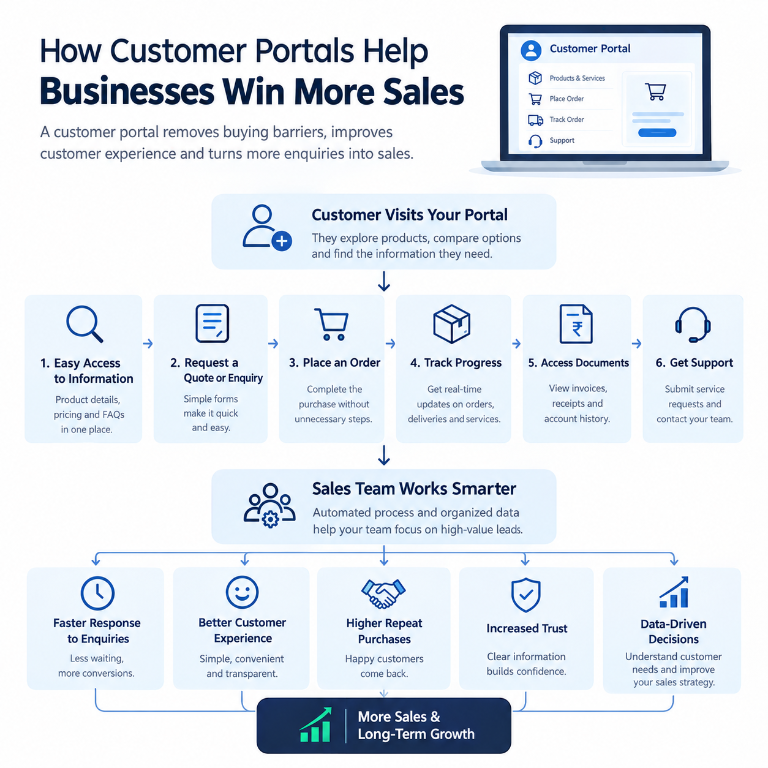
A customer portal offers a more organized way to help customers interact with a business. By providing access to relevant information and useful online features, companies can simplify the buying journey and create more opportunities to convert interested prospects into paying customers.
What Is a Customer Portal?
A customer portal is a secure online platform where customers can access information, communicate with a business, and complete specific activities without depending entirely on direct assistance from employees.
Depending on the company's requirements, a portal may include:
- Product and service information
- Customer account registration and login
- Enquiry and quotation request forms
- Order placement and tracking
- Invoice and payment information
- Service request submission
- Document downloads and account history
- Customer support and communication features
For example, a wholesale supplier could provide a portal where registered buyers view product specifications, request bulk quotations, check order status, and access invoices. This makes the purchasing process more convenient for both parties.
1. Make It Easier for Customers to Buy
Customers are more likely to consider a business when finding information and taking the next step is straightforward. If buyers must contact multiple departments to obtain pricing, product details, availability, or order information, they may turn to a competitor offering a simpler experience.
A customer portal can bring important information together in one place. Businesses can display relevant product details, explain service options, and provide clear actions for requesting a quote or starting an order. The goal is to remove unnecessary steps between a customer's initial interest and their purchase decision.
2. Help Sales Teams Handle More Enquiries
When a company receives numerous enquiries, its sales team can spend a considerable amount of time answering repetitive questions and collecting basic customer information.
A properly designed portal can automate parts of this process. Customers can submit their requirements through structured forms, select relevant products or services, and provide the information needed for an initial assessment. The sales team can then focus on enquiries that require consultation, negotiation, or a customized proposal.
For businesses with longer sales cycles, this approach can also help employees gather consistent information before speaking with a prospective buyer.
3. Improve the Experience for Existing Customers
Sales growth does not depend only on acquiring new customers. Repeat purchases, renewals, and referrals can also contribute significantly to business revenue. However, existing customers may become dissatisfied if they struggle to place another order, find previous invoices, or obtain updates about their requests.
A customer portal can provide a convenient way to manage ongoing business relationships. Customers may be able to review previous orders, download documents, submit service requests, or check the progress of an existing transaction. When routine activities become easier, customers have fewer reasons to look for alternatives.
4. Reduce Delays in the Buying Process
A slow response can create uncertainty for potential customers, especially when they are comparing multiple suppliers. Although a portal cannot replace every sales conversation, automated acknowledgements, enquiry forms, document access, and order updates allow customers to complete certain activities without waiting for manual assistance.
Businesses can also connect portal features with internal systems so that relevant teams receive the information they need.
For instance, a quotation request submitted by a customer could be routed to the appropriate sales representative, while the customer receives confirmation that the request has been received.
These improvements can make the purchasing process more organized and easier to follow.
5. Build Trust Through Transparency
Customers want to understand what happens after they submit an enquiry or place an order. Uncertainty about pricing, delivery schedules, service progress, or payment status can affect their confidence.
A customer portal can provide clear information about transaction stages. Depending on the business model, customers may be able to view order updates, review quotations, access invoices, and track service requests. Businesses should ensure that displayed information is accurate, secure, and regularly updated.
Transparency does not guarantee a sale, but it can reduce confusion and help customers make informed purchasing decisions.
6. Use Customer Data to Improve Sales Decisions
With appropriate analytics and privacy safeguards, a customer portal can help businesses identify frequently requested products, common support issues, abandoned purchasing steps, and recurring customer needs. These insights can reveal opportunities for improvement.
If customers frequently request additional product specifications, for example, the business could make those details easier to find. If many buyers abandon a lengthy enquiry form, simplifying it may reduce friction. The purpose is to improve the buying experience, not collect unnecessary customer data.
7. Choose Features That Match Your Business Model
Not every business needs a complex customer portal. A B2B supplier may need bulk quotation requests, customer-specific pricing, and order tracking. A service company may prioritize appointment requests, project updates, document sharing, and support tickets. An e-commerce business may focus on account management, repeat ordering, payments, and delivery updates.
Before investing in development, businesses should map the customer buying journey, identify repeated questions and delays, define essential features, plan system integrations, set security requirements, and measure results after launch. This keeps investment focused on real customer needs.
How Mithila Softech Can Help
Every business has different customer expectations and sales processes. Mithila Softech provides web development and custom software solutions to build digital systems around operational requirements.
A portal project can begin with an assessment of the buying journey, followed by feature planning, interface design, development, testing, and deployment. It may also integrate with existing CRM, inventory, payment, or order management systems.
Define expected outcomes before development begins, such as reducing response delays, increasing completed enquiries, improving repeat ordering, or making customer support more efficient.
Conclusion
A complicated buying process can create unnecessary barriers between a business and its potential customers. A customer portal can simplify access to information, organize customer interactions, reduce repetitive work, and make transactions easier to follow.
The best results come from building around real customer needs rather than adding technology without a clear purpose. With thoughtful planning and suitable web application development, businesses can create a smoother buying journey and build stronger customer relationships. Mithila Softech can help businesses explore tailored web development solutions that support their sales processes, customer experience, and operational goals.
Frequently Asked Questions
1. How can a customer portal help increase sales?
A customer portal can make it easier for buyers to find information, submit enquiries, request quotations, and place orders. By reducing unnecessary steps and delays, it can support a smoother purchasing journey.
2. Which businesses can benefit from customer portal development?
Manufacturers, wholesalers, distributors, service providers, e-commerce businesses, and B2B companies can benefit from portals tailored to their sales processes and customer requirements.
3. What features should a business customer portal include?
Common features include customer login, product information, enquiry forms, quotation requests, order tracking, document access, payment information, and customer support. The right feature set depends on the business model.
4. Can a customer portal integrate with existing business software?
Yes. Depending on the requirements, a portal can integrate with CRM platforms, inventory systems, accounting software, payment gateways, and order management tools.
5. How do I choose the right web application development company for a customer portal?
Look for a development partner that understands your business processes, defines a clear project scope, follows appropriate security practices, and provides a practical plan for testing, deployment, maintenance, and future improvements. Review relevant experience and agree on measurable business objectives.
← Back to Blogs