

Managing daily business operations involves several repetitive activities, including data entry, customer communication, invoice processing, reporting, employee coordination, and order management. When these activities are handled manually, they can consume valuable time, increase operational expenses, and create unnecessary delays.
As businesses grow, managing these processes becomes more challenging. Teams may struggle with disconnected software, duplicated information, delayed approvals, and inefficient communication between departments.
Business process automation offers a practical way to address these challenges. By using customised software, digital workflows, and integrated business applications, companies can simplify routine operations and improve overall productivity.
For businesses looking to remain competitive, automation is not just about reducing manual work. It is about building more efficient systems that support business growth.
What Is Business Process Automation?
Business process automation (BPA) involves using technology to perform repetitive business activities with minimal manual intervention.
Instead of depending on employees to complete every routine task, businesses can establish automated workflows that follow predefined rules and processes.
For example, when a customer submits an enquiry through a website, an automated system can record the information, notify the sales team, assign the lead, and schedule a follow-up.
Similarly, businesses can automate invoice generation, employee approvals, inventory updates, customer notifications, and reporting activities.
The main objective is to make everyday operations faster, more consistent, and easier to manage.
Why Businesses Need Process Automation
Many companies continue using manual processes even when their operations become more complex. Although these methods may work initially, they can create limitations as the business expands.
Here are some common challenges that automation can help address.
1. Too Much Time Spent on Repetitive Tasks
Employees often spend significant time entering information, updating spreadsheets, sending reminders, and preparing reports.
These activities are important but do not always require continuous manual involvement.
Automation allows businesses to handle routine activities through predefined workflows, giving employees more time to focus on customer service, planning, and other important responsibilities.
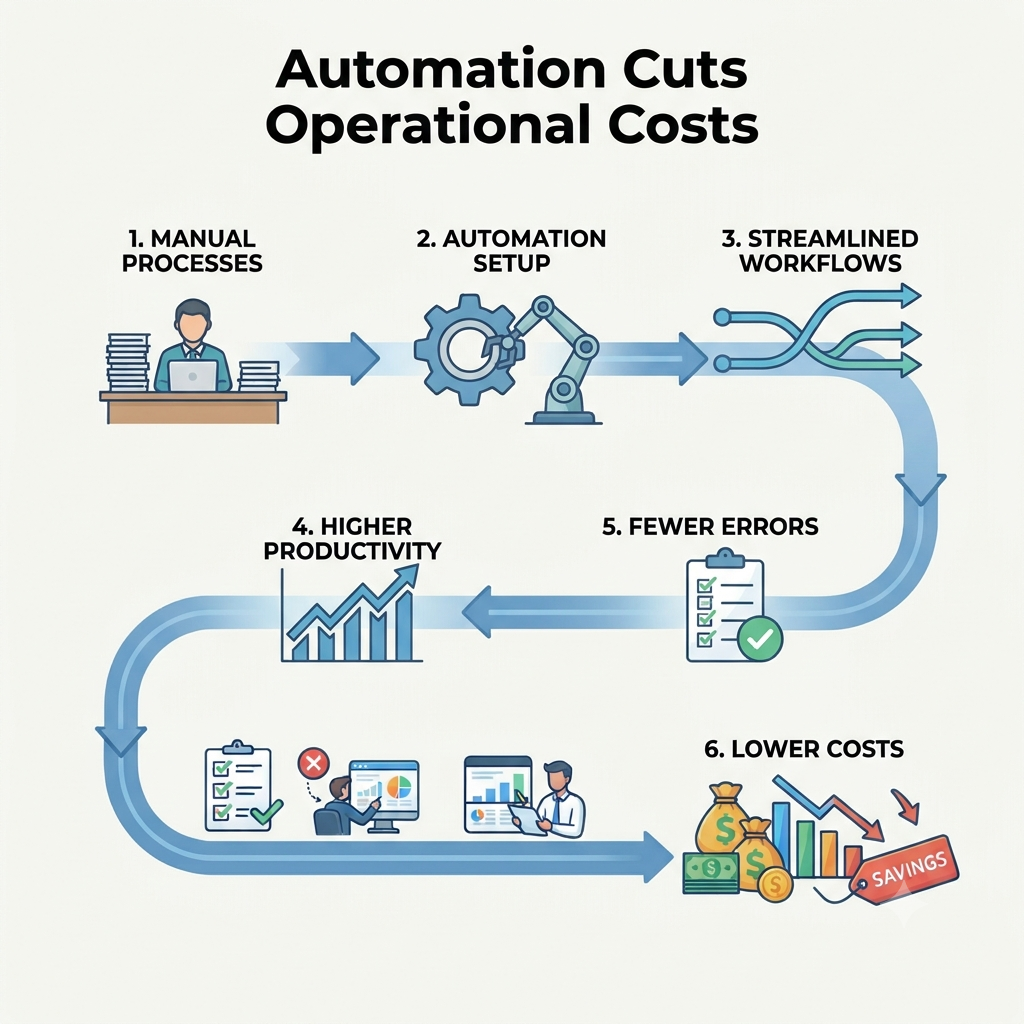
2. Increased Operational Expenses
Manual processes require employee time and administrative resources. Repeated data entry, unnecessary approvals, and duplicated tasks can increase operating costs.
Automated workflows help reduce avoidable administrative work and improve resource utilisation.
Businesses can also identify inefficient activities and redesign processes to achieve better operational control.
3. Human Errors and Inconsistent Information
Manual data handling can result in incorrect entries, missing information, and inconsistent records.
These errors may affect customer communication, financial reporting, inventory management, and internal decision-making.
Automation can improve consistency by transferring information between connected systems and applying predefined validation rules.
4. Delays in Business Communication
When departments depend on manual communication, important updates may get delayed.
For example, a sales team may need to wait for approval from the finance department before confirming an order.
Automated notifications, task assignments, and approval workflows can help ensure that relevant employees receive information at the right time.
7 Business Processes That Companies Can Automate
Businesses do not need to automate every activity at once. A better approach is to identify repetitive tasks that consume considerable time or frequently create operational problems.
The following processes are useful starting points.
1. Customer Relationship Management
Customer management involves collecting enquiries, updating contact information, tracking sales opportunities, and following up with potential customers.
CRM automation can help businesses:
- Automatically capture customer enquiries.
- Assign leads to appropriate sales representatives.
- Schedule follow-up reminders.
- Update customer records.
- Track sales pipeline activities.
- Generate customer activity reports.
This helps sales teams manage customer relationships more efficiently and reduces the chances of missed enquiries.
2. Invoice and Payment Processing
Financial administration often involves creating invoices, tracking payments, sending reminders, and maintaining transaction records.
Automated systems can generate invoices using predefined templates, update payment statuses, and notify employees about outstanding payments.
Businesses can also integrate accounting software with other internal applications to improve financial record management.
3. Employee Management and HR Activities
Human resource departments handle several recurring responsibilities, including attendance tracking, leave requests, employee records, and onboarding.
HR automation can simplify these activities through:
- Digital attendance management.
- Automated leave approval workflows.
- Employee record management.
- Onboarding task assignments.
- Payroll data processing.
- Employee notifications.
This reduces administrative workload and makes employee management more organised.
4. Inventory and Order Management
Businesses dealing with products and supplies need accurate information about stock levels, orders, and deliveries.
Inventory automation can update stock records when orders are processed, generate low-stock alerts, and help teams monitor product availability.
It can also connect inventory systems with sales platforms to maintain consistent information across business operations.
5. Sales and Marketing Activities
Sales and marketing teams regularly manage customer enquiries, campaigns, follow-ups, and performance reports.
Automation can help organise these activities through lead assignment, email notifications, campaign workflows, and customer segmentation.
When connected with CRM software, these systems can provide better visibility into customer interactions and sales activities.
6. Document Management and Approval
Many organisations rely on documents for internal approvals, contracts, purchase requests, and administrative activities.
Digital document workflows can simplify file submission, approval requests, notifications, and record storage.
Employees can track approval status without repeatedly contacting different departments.
7. Business Reporting and Data Management
Preparing reports manually can take considerable time, especially when information comes from multiple departments.
Automated reporting systems can collect relevant data, organise information, and generate reports according to predefined schedules.
Managers can use dashboards to monitor business performance, identify operational issues, and make informed decisions.
How Custom Software Development Supports Business Automation
Ready-made automation tools can be useful for standard business requirements. However, some organisations need specialised workflows that cannot be handled effectively through generic applications.
This is where custom software development becomes valuable.
Custom software allows businesses to develop applications around their actual operational requirements rather than changing their processes to fit an existing platform.
For example, a manufacturing company may require software that connects inventory, purchase orders, production activities, and supplier information. Similarly, a service-based organisation may need a platform that manages customer enquiries, employee assignments, project progress, and billing.
When evaluating the best software development company in dubai, businesses should consider whether the development team can understand their workflows and build automation solutions that address specific operational challenges.
A customised solution may include:
- Automated task management.
- Custom workflow dashboards.
- CRM and ERP integration.
- API-based data exchange.
- Automated notifications.
- Role-based access management.
- Real-time reporting.
- Cloud-based business applications.
The right combination of features depends on the company's size, industry, existing systems, and future requirements.
Key Benefits of Business Process Automation
Implementing automation can improve several areas of business operations.
Improved Employee Productivity
Employees spend less time completing repetitive administrative activities and can focus on tasks that require decision-making, communication, and problem-solving.
Better Operational Accuracy
Automated workflows help maintain consistent processes and reduce errors associated with repeated manual data entry.
Faster Business Operations
Tasks such as approvals, notifications, record updates, and report generation can be completed more quickly through automated systems.
Improved Customer Experience
Faster enquiry handling, organised customer records, and timely communication help businesses deliver more consistent customer service.
Better Business Visibility
Centralised information and automated reporting make it easier for managers to monitor activities and identify areas requiring improvement.
Easier Business Expansion
Well-designed software systems can support additional users, new departments, and increasing operational requirements as a company grows.
How to Implement Business Process Automation Successfully
Automation requires proper planning. Introducing software without understanding existing workflows may create additional complexity instead of solving operational problems.
Businesses can follow these steps to implement automation effectively.
Step 1: Identify Repetitive Business Activities
Start by reviewing daily operations and identifying activities that involve repeated data entry, manual communication, unnecessary approvals, or frequent delays.
Step 2: Prioritise Processes
Not every activity needs immediate automation. Focus first on processes that consume significant employee time or regularly create operational difficulties.
Step 3: Select the Right Technology
Evaluate whether existing software, third-party automation tools, or custom-developed applications are appropriate for your requirements.
Consider functionality, integration capabilities, security, scalability, and overall project cost.
Step 4: Plan System Integration
Ensure that new automation systems can communicate with the applications your business already uses.
Proper integration helps maintain consistent information and reduces the need for duplicate data entry.
Step 5: Test Before Full Implementation
Test automated workflows with actual business scenarios before introducing them across the organisation.
Check task assignments, notifications, data accuracy, permissions, and error-handling procedures.
Step 6: Train Employees and Monitor Performance
Employees should understand how the new system works and how it affects their responsibilities.
Monitor performance regularly and make improvements whenever business requirements change.
How Mithila Softech Can Help Businesses Automate Their Operations
Choosing the right technology partner is important when implementing business automation. Companies need solutions that address their current operational challenges while allowing room for future improvements.
Mithila Softech offers technology services covering custom software development, web applications, CRM, ERP, and related digital solutions.
Businesses can explore customised software applications designed to simplify internal workflows, connect business systems, and improve operational management.
The development approach can be planned around individual project requirements, including functionality, integration needs, security considerations, and scalability.
If your organisation is planning to automate business operations, connect with Mithila Softech to discuss your requirements and explore suitable software development solutions.
Conclusion
Business process automation helps organisations improve productivity, reduce repetitive administrative work, minimise manual errors, and manage daily operations more effectively.
From customer management and invoice processing to inventory control and employee administration, automation can simplify activities across different departments.
However, successful implementation depends on identifying the right processes, selecting suitable technology, and ensuring that different systems work together efficiently.
Businesses searching for the best software development company in dubai should prioritise technical expertise, customised solutions, integration capabilities, and long-term support when selecting a development partner.
With proper planning and the right software, companies can build more efficient workflows, improve operational control, and establish a stronger foundation for sustainable business growth.
Frequently Asked Questions
1. What is business process automation?
Business process automation involves using software and technology to perform repetitive business activities with minimal manual intervention. It helps improve efficiency, reduce errors, and streamline daily operations.
2. Which business processes can be automated?
Common examples include customer management, invoice processing, employee administration, inventory management, order processing, document approvals, sales activities, and business reporting.
3. Is custom software necessary for business automation?
Not always. Ready-made software may be sufficient for standard requirements. However, custom software is useful when businesses need specialised workflows, unique features, or integration with existing applications.
4. How does business automation reduce operational costs?
Automation reduces repetitive manual work, minimises data entry errors, improves resource utilisation, and speeds up routine processes. These improvements can help businesses manage their operational expenses more effectively.
5. How can I choose the right software development partner for business automation?
Evaluate the development company's technical expertise, custom software capabilities, integration experience, security practices, project communication, pricing transparency, and post-launch support. Also, ensure that the team understands your business requirements before recommending a solution.
← Back to Blogs